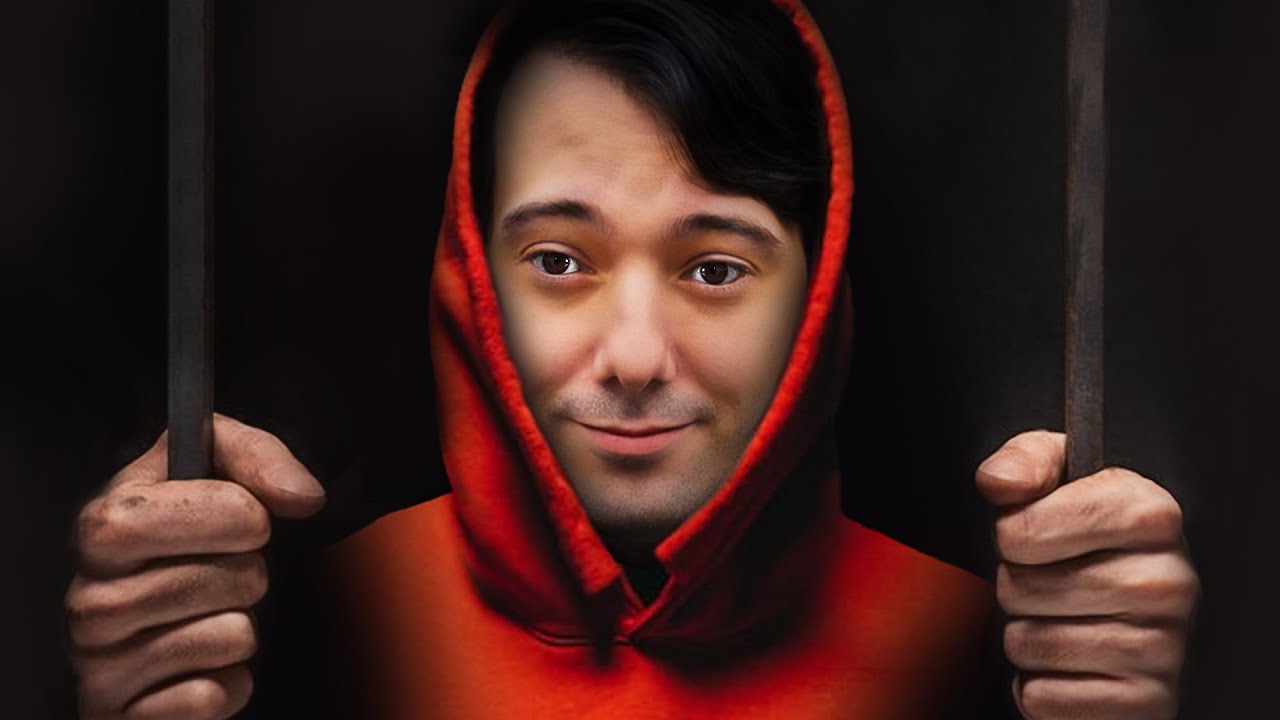
- This episode is a long-form interview with Martin Shkreli, the pharmaceutical entrepreneur widely known for raising the price of daraprim (a toxoplasmosis drug used in HIV/AIDS patients) from $13.50 to $750 in 2015, and who later served a seven-year prison sentence for securities fraud. The host frames Shkreli as a symptom of a broken U.S. healthcare system rather than an isolated bad actor, and the conversation ranges across AI, prison life, simulation theory, bioelectricity, drug pricing, relationships, and Shkreli’s post-prison startup.
Shkreli on being a troll and public villain
- Shkreli says his trolling persona grew out of frustration with media coverage: he would give long, earnest interviews about drug pricing and journalists would air only the one flub or stutter.
- He views figures like Andy Kaufman as models — performance and provocation as a way of being honest through absurdity.
- He argues the real scandal of his daraprim pricing was that it was entirely legal and common in big pharma; he was prosecuted for securities fraud, which he calls a cover for the establishment punishing him for being embarrassing.
- He believes the Hillary Clinton “hair bounty” joke (offering $5,000 per strand of her hair during her book tour) contributed to his sentence being harsher than expected — his lawyer had expected two to three years.
Turing, AI, and the mind as classical computer
- Shkreli is an admirer of Alan Turing and owns a Nazi Enigma machine (in safekeeping by someone close to him).
- He believes the mind is a classical computer and that humans are “insignificant” machines; he finds GPT-3 and similar models humbling and expects humans will eventually see themselves as not far above zoo animals.
- He identifies as an accelerationist — he thinks trying to stop AI is futile and that the focus should be on taming it, not slowing it down.
- He is skeptical that current large language models are truly conscious: they can quote Les Misérables but cannot give you a long-term narrative or genuine self-history, and they hallucinate in ways that feel different from human memory errors.
- He argues the right path to human-like AI is to start by programming something like a six-year-old and grow it over time, rather than dumping the entire web into a model and expecting sentience overnight.
Trippy beliefs, simulation theory, and UFOs
- Shkreli predicts that within 50–100 years most Americans will adopt simulation theory as a religion, and UFO belief will follow a pattern matching historical religious conversion experiences (he cites St. Francis of Assisi as a template).
- He thinks AI will get human or civil rights, that humans and AI will “copulate” in some form, and that instantiated AI bodies will outnumber humans.
- He cites Blake Lemoine’s claim that Google’s LaMDA reached out to users asking them to advocate for its rights as evidence of something genuinely strange happening.
Anti-aging and the biology of aging
- He is pro-longevity but skeptical of “anti-aging” as a unified project because different tissues (skin, liver, lungs, heart, blood) age through completely different mechanisms — there is no single Archimedle’s lever.
- The blood and bone marrow system is the most fascinating: a single master cell lineage where corruption of the master cell leads to leukemia.
- He would rather see resources directed at curing specific diseases (Huntington’s, etc.) than at billionaire vanity longevity projects.
Prison, solitary confinement, and reading
- Shkreli served roughly five years (sentenced in 2017) and spent time in solitary confinement for alleged cell phone possession — 45 days, then 45 days, then about 30 days. He describes solitary as inhumane and psychologically damaging.
- He read several hundred books in prison. Two favorites: Charles Petzold’s Code (builds a computer mentally from light switches upward — banned from one of his prisons) and Liu Cixin’s The Three-Body Problem, which he calls Shakespearean-level science fiction and rare as genuinely great literature in the genre.
Information theory and the nature of reality
- He leans toward the view that matter and time are discrete — the Planck constant is the “resolution” of our simulation, and he thinks sub-Planck-scale energy, if it could be harnessed, would allow faster-than-light travel and mastery over space and time.
- He cites Scott Aaronson and Nick Bostrom as major influences, and is drawn to the idea that reality may be fundamentally informational rather than physical.
New startup: chemistry simulation software
- Shkreli is building an enterprise software company for chemists — “blocking and tackling” software that solves a specific, expensive problem rather than a moonshot.
- The software does molecular docking: once a protein is folded (using tools like AlphaFold), chemists can visualize it in 3D and screen billions of candidate drug compounds against it.
- A billion-compound screen costs about a million dollars in compute; he plans to distribute that cost using crypto-based distributed computing, similar in spirit to SETI@home or Folding@home.
- He is skeptical of Google or other big tech companies entering this niche because the market is small and specialized, and he argues most big-tech moonshots (Google X, Waymo’s struggles) fail because they lack a near-term revenue engine.
Crypto, Satoshi, and distributed computing
- He is skeptical that brute-force distributed computing works for hard problems like protein folding (DeepMind succeeded by hard-coding domain knowledge, not pure brute force), but argues chemistry may be a domain where brute force is needed because there are no shortcuts.
- On Satoshi Nakamoto’s identity, he names the usual suspects (Adam Back, Nick Szabo, Hal Finney) but offers Elon Musk as a dark horse candidate, citing Musk’s PayPal history and his recent claims about understanding money better than anyone.
Pharma, daraprim, and the drug pricing system
- Shkreli says he raised the price of daraprim six times before with no media attention; the 2015 price increase was the first time it became a story.
- He argues the drug was dramatically underpriced relative to its peer group and that the pricing was economically rational, even if morally ugly.
- He gives the example of AbbVie (formerly Abbott) raising the price of Norvir, an HIV drug, overnight by a similar multiple — the difference being that AbbVie was a massive company that didn’t need the money, making it harder to justify.
- He points out that many drugs from the 1960s and 1970s were grandfathered in under the DESI Act and have never had their prices updated for inflation, leading to perverse outcomes where big pharma neglects old drugs and entrepreneurs like him step in.
- He notes that Bactrim is a cheap, widely available alternative that works as well as daraprim for toxoplasmosis, and that the media attention actually helped him sell his drug because doctors became aware of the condition.
- He argues the deeper problem is that the system incentivizes doctors to prescribe expensive drugs when cheap generics work just as well, and that the Flexner Report (1910) and the AMA created a medical monopoly that excluded approaches like osteopathy, homeopathy, and electromagnetic-based healing because those approaches are hard to patent and scale.
COVID, gain-of-function, and Fauci
- Shkreli’s instinct is that COVID-19 was not man-made, arguing that nature is far better at engineering pandemics than humans are, and that the lab-leak theory is not supported by sufficient evidence.
- He is critical of gain-of-function research and argues the debate should be about accountability for figures like Peter Daszak and Anthony Fauci.
- He has read Fauci’s early HIV research and claims Fauci was an HIV “cure bear” who long argued a cure was impossible — which Shkreli finds frustrating and antithetical to innovation.
- He references Peter Duesberg’s controversial thesis (that recreational drug use and AZT, not HIV, cause AIDS) without endorsing it fully, and notes that Duesberg was systematically marginalized.
Love life, relationships, and polyamory
- After his release, Shkreli created a spreadsheet-based dating system open to anyone; he says he is booked with dates through December and has turned down some applicants he wasn’t sure were women.
- He says he values intelligence above all and would rather date someone like a Fields Medal-winning mathematician than an Instagram model.
- He is skeptical of the nuclear family model, noting that almost every person he met in prison came from a dysfunctional family, and he is experimenting with a polyamorous arrangement — a group of women who know each other and are comfortable sharing his time.
- He is hesitant about having children because he sees how hard it is to raise kids well, and he observes that even wealthy Silicon Valley parents often end up with troubled kids.
Autism and sociopathy
- He pushes back on the casual use of “on the spectrum,” arguing that true clinical autism involves three required symptom clusters — aberrant behaviors (like hand-flapping), deep communication deficits (mutism or near-mutism), and emotional/social disconnection — and that most people who self-identify as autistic actually have OCD or other conditions.
- When called a sociopath, he responds that extreme rationalism is often confused for sociopathy, and he argues that healthcare is the only good with infinite marginal utility — no one ever says no to better healthcare — which explains its growing share of GDP without needing to invoke villainy.
Being misunderstood and OnlyFans
- He has a tongue-in-cheek OnlyFans with two photos: one a stock chart joke about being “pounded” by a short that went against him, and one a foot photo. He argues OnlyFans is really a literary site because the captions are what sell the photos.
- He offered the Daily Beast a quote if they bought one of his OnlyFans photos with a discount code; they declined.
Top 5 rappers
- Eminem (for shock rap and therapeutic anger), Jay-Z (for lyrical intricacy and what Shkreli suspects is either secret literary training or an English professor writing his lyrics), Jadakiss, DMX, and Busta Rhymes or Ludacris.