-
Josh Wolfe, co-founder and managing director of Lux Capital, describes his journey from a modest upbringing in Brooklyn and Cornell, New York, to building a venture firm that backs scientists and entrepreneurs pursuing counter-conventional solutions to hard problems. He credits a chip-on-shoulder mentality—growing up with less money than wealthy peers—as the psychological engine behind his investing, and he looks for that same hunger in founders. Lux, Latin for “light,” was designed to sit at the intersection of science and finance, matching Wolfe’s wide-ranging intellectual curiosity with the chance to fund frontier technologies.
-
Kurion and the Fukushima disaster
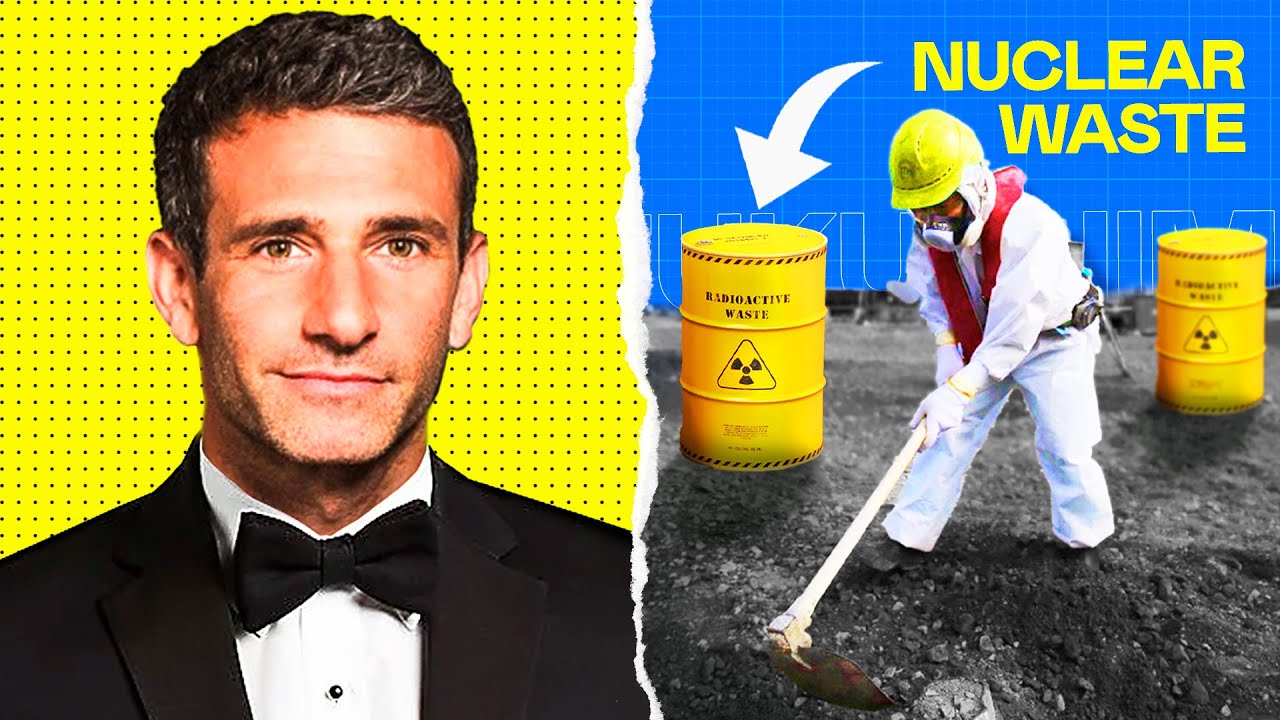
- In 2008, Lux co-founded Kurion (named after Marie Curie) to tackle nuclear waste cleanup, specifically extracting cesium and strontium from high-concentration salt water—a problem many considered unsolvable. The company started at a roughly $3 million pre-money valuation and struggled to attract investors, who preferred solar, wind, and electric cars.
- When the 2011 tsunami and hydrogen explosions hit the Fukushima Daiichi plant, Kurion’s technology was uniquely suited to treat the contaminated water. It became essentially the only game in town, deploying a large-scale engineering system that removed about 99% of the radiation from Fukushima’s contaminated water. Revenue jumped from roughly $1 million to nearly $200 million in a few years.
- Wolfe notes that about 25% of the U.S. Department of Energy’s budget goes to nuclear waste cleanup at Cold War-era sites like Hanford, Savannah River, and Idaho National Labs—far more than most people realize.
-
Nuclear energy outlook
- Wolfe argues nuclear is the most viable large-scale, low-carbon baseload power source, while wind and solar are volatile, seasonal, and geography-specific, and natural gas only reduces rather than eliminates carbon emissions.
- He believes nuclear’s dangers are overstated: Chernobyl’s containment was outdated by modern standards, direct deaths from Fukushima are very hard to attribute, and the idea that power reactors can easily be turned into weapons is largely wrong—it would take years of lead time and is extremely difficult.
- He suggests rebranding nuclear as “elemental power” (elements of the earth, like uranium, alongside solar and wind) to counter the anti-nuclear sentiment shaped by his mother’s generation conflating nuclear weapons with nuclear energy.
- Progress is being made through portable microreactor companies and projects like TerraPower’s wave reactor, which can repurpose nuclear waste as fuel, but he thinks broad adoption may take another generation.
-
Variant Bio: finding “mutant” traits in isolated populations
- Inspired by the X-Men concept of Professor X identifying mutants, Variant Bio searches remote, genetically homogeneous, and often consanguineous populations—including uncontacted communities—for rare phenotypic traits such as extraordinary lung capacity, upper body strength, or disease resistance.
- Because most genetic studies have focused on European and U.S. samples (e.g., 23andMe, Roche, Genentech), these outlier traits in outlier regions are underexplored. The genetic homogeneity of island and isolated populations makes it easier to pinpoint responsible genes.
- Once identified, these gene sequences can become targets for new gene therapies—for example, a trait for high fat-burning metabolism during sleep in cold environments could be drugable for obesity in the U.S.
-
Capital cycles and deep tech
- Wolfe describes excess venture capital as a “tractor beam for the future,” compressing 20-year ideas into 20-month frenzied projects. While roughly 90% of startups will fail, the sheer volume of funding accelerates deep tech and creates combinatorial possibilities from the detritus of failed experiments.
- He favors funding hard, frontier-science companies precisely because they are difficult: the difficulty is the moat, and abundant capital can de-risk them through follow-on rounds even if many investors lack high conviction.
-
Evaluating founders and managing risk
- Wolfe’s due-diligence approach is rooted in simple skepticism—his litmus test for Theranos would have been simply “Does it work?”—and funding tied to milestones, like anted chips in a poker game, where each round reveals whether the odds have improved.
- He applies a thermodynamics-inspired principle: risk and value are conserved, not created. By identifying and killing technical, product, management, recruiting, and competition risks early, an early investor transfers a de-risked opportunity to later investors, who should then demand lower returns.
- He looks for cognitive diversity at Lux to avoid being a firm of short sellers, and he values founders who rebel across disciplinary boundaries—like an AI expert applying computer vision to pathology slides that domain experts assumed were their territory.
-
Sector themes and the race for prestige
- Major Lux themes include aerospace and defense, hardware and software, and what Wolfe calls the “race for prestige” between the U.S. and China. He sees prestige historically expressed through Olympics, chess, cultural exports, and Nobel Prizes, and predicts enormous demand for cutting-edge scientific equipment and software that enables Nobel-caliber work.
- He issues a call for entrepreneurs to solve smell: capturing volatile organic compounds the way Shazam captures a song, then playing them back. He references Luca Turin’s theory that the nose works like a spectroscope based on vibrational frequencies, and believes solid-state chips will eventually make this solvable.
-
Space: railroads turned vertical
- Wolfe compares the space economy to the 19th-century railroad boom—instead of laying steel tracks horizontally, rockets go vertically, with reusable rockets driving down costs. He favors Jeff Bezos’s vision (moving dull, dirty, dangerous industry off Earth and delivering space-made goods like “Amazon Prime, same day”) over Elon Musk’s escapist Mars focus.
- Geopolitically, he notes that while the U.S. and Russia once cooperated in space, Russia is now partnering with China, and China and Russia each have space stations. Private space stations will become the orbital equivalents of Amazon’s local storage and delivery hubs.
-
Signaling and the influencer investor
- Wolfe sees value in being a vocal, credible signal to entrepreneurs that Lux is open for business. He traces the evolution from blogging VCs like Fred Wilson and Chris Dixon to the Twitterati, and emphasizes that the best signal is intellectual honesty—being candid about what works and what doesn’t, and calling out hucksters. The real opportunity is where people are making money quietly, “the curious incident of the dog in the night.”
-
Inspirations
- In venture, Wolfe admires Don Valentine, Bill Gurley, the competitive drive of Mike Moritz and Doug Leone at Sequoia, and Peter Thiel’s contrarian focus on consensus versus variant perception. Outside venture, Buffett and Munger shaped his view of rational capital allocation, and he cites Jeff Bezos as a modern embodiment—someone who raised roughly $300 million in an IPO and never raised another dollar of external capital.
-
Genetics: embryo selection, CRISPR, and gametogenesis
- Wolfe expects genetic technologies to advance gradually, then suddenly—comparing the current moment to how shocking surrogacy or IVF would have seemed 50 years ago. Already, genetic testing during pregnancy screens for conditions like Tay-Sachs and trisomies, and some parents make ethically complex decisions based on results.
- He anticipates gene editing to remove harmful mutations will become elective, sparking major societal debate, and points to China’s CRISPR experiments on dogs (creating hyper-muscular whippets) and rumors about super-soldier research as signs of a “wild west” in genetics.
- Gametogenesis—reprogramming a skin cell into a primordial stem cell and then into a synthetic gamete, generating thousands of genetic variations—strikes him as “totally wild” and a form of playing God that extends humanity’s long history of selective breeding since the agricultural revolution.
-
New York City’s future
- Wolfe is bullish on New York, citing Santa Fe Institute research by Jeff West showing that cities like NYC exhibit superlinear scaling: adding people yields disproportionate increases in patents, business activity, and creativity. He sees a cycle where artists, hipsters, techies, and then wealthier residents transform neighborhoods—as happened in Brooklyn—and believes the city’s diversity and kinetic interactions keep it among the world’s most vibrant metropolises.
-
Contact: Wolfe invites hard tech entrepreneurs to reach him at [email protected].